
Will Drain Cleaner Dissolve Hair? What Homeowners Should Know
Sometimes—but not every drain cleaner dissolves hair, and no product can promise to clear every clog. Some labeled clog removers are specifically marketed for hair in bathroom sinks, tubs, and showers. Others are made for grease or routine maintenance. The useful answer depends on the exact formula, the drain, and the product label.
For example, SC Johnson says its Drano Max Gel is designed to remove hair, soap scum, grease, and other clogs. The Clorox-owned Liquid-Plumr Hair Clog Eliminator is also marketed for hair clogs in bathroom drains. Those are claims for specific products; they should not be generalized to every bottle labeled “drain cleaner.”
What does “dissolve hair” mean?
Bathroom clogs often collect strands of hair along with soap residue and other debris. A drain opener labeled for hair is intended to act on that material so water can carry loosened residue away. The product may not make a visible hairball disappear instantly; performance depends on the formulation, the amount and location of hair, water in the drain, and how severe the blockage is.
That is why the label matters more than the generic phrase “drain cleaner.” A biological maintenance product, a grease-focused kitchen product, and a chemical hair-clog gel are not interchangeable. Our article on 3n1 Total-C drain cleaner, for instance, explains that its manufacturer describes it as a drain maintenance additive and directs users to get professional help for a blocked drain.
Which products are labeled for hair clogs?
Check the front and back label for the fixture and clog type before using a product. As examples, the Drano Max Gel product page says it works on hair, soap scum, grease, and other clogs, and the Liquid-Plumr Hair Clog Eliminator page describes a product designed for hairballs in bathroom drains.
These examples do not establish that all drain openers work on hair, nor that either product is right for every fixture or pipe condition. Follow the package instructions for the exact product you have, including the allowed application, dose, wait time, and rinse instructions. Do not use a product in a toilet or disposal unless its label expressly permits that use.
When a hair clog may not respond to a drain cleaner
A product is less likely to solve the problem if the obstruction is not mainly hair, sits beyond the reach of the cleaner, or is mixed with a solid object or heavy buildup. A drain opener may also fail to restore flow if the pipe is damaged or the line has a deeper restriction. If water is fully stopped, keeps backing up, or the clog returns soon after treatment, avoid adding more product unless the label specifically instructs you to repeat the application.
For a fixture-level clog, removing visible hair from a stopper or strainer may be a practical first step if it can be done safely and without forcing parts. A hand drain tool can sometimes pull out hair rather than treating it chemically; our guide to a drain-cleaning tool covers mechanical options. The broader guide to choosing a drain-cleaning method compares common approaches. Do not plunge after applying a chemical cleaner unless that exact product label explicitly says it is safe; Drano Max Gel’s label says not to use a plunger during or after use because product may remain and splash back.
Drain-cleaner safety homeowners should know
Some chemical drain openers can cause serious injuries. The manufacturer’s U.S. SDS for Liquid-Plumr Hair Clog Eliminator, revised January 4, 2021, classifies that specific product as causing severe skin burns and eye damage. It lists sodium hydroxide and sodium hypochlorite among its ingredients and warns that it can react with products such as ammonia, acids, toilet-bowl cleaners, and other drain openers to produce hazardous gases.
Use only the package directions for your product. Wear the protective gear required by its label, avoid splashes, keep children and pets away from the work area, and keep the container closed and in its original packaging. Never mix drain cleaners with one another or with other household cleaners. Do not use a plunger or another tool in a drain containing chemical cleaner unless the product instructions explicitly allow it; splash-back can expose skin and eyes to the product.
If there is already another product in the drain, do not add a different cleaner. If a cleaner contacts someone’s eyes or skin, or is swallowed or inhaled, follow the product label’s first-aid directions. The U.S. Poison Control Center advises calling 1-800-222-1222 for urgent exposure guidance; call 911 for a life-threatening emergency.
A practical decision path for a slow bathroom drain
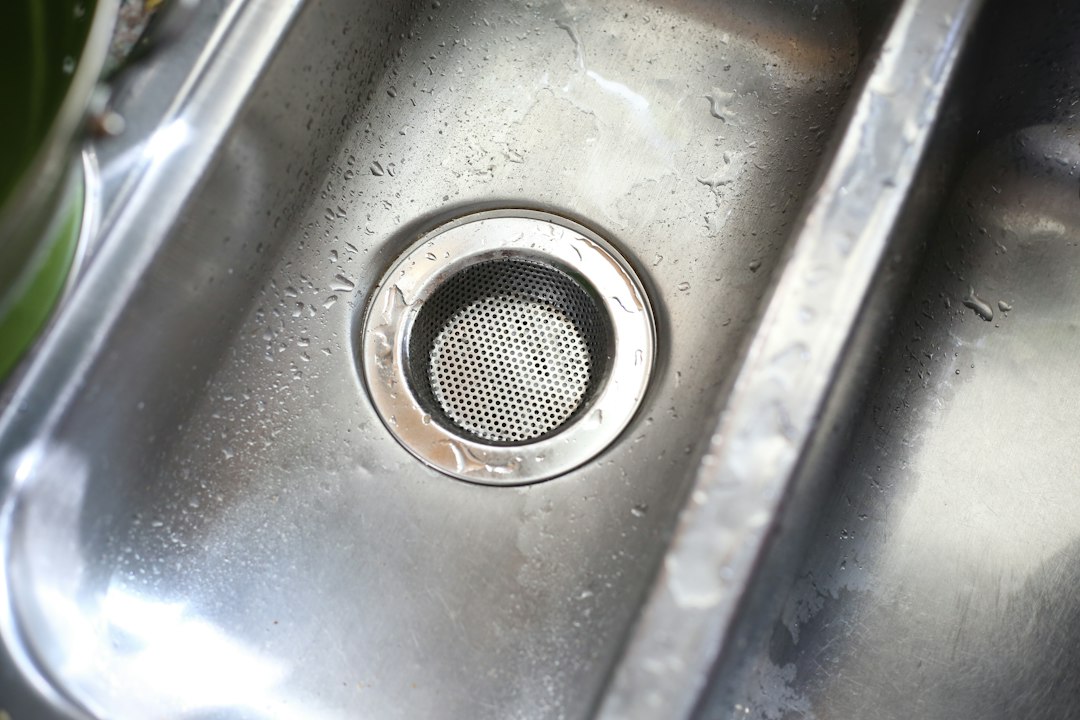
Start by checking whether one fixture is slow or several fixtures are affected. A single shower or sink that drains slowly may have hair near its stopper; if visible material can be removed without disassembling or forcing the fixture, clear it and see whether flow improves. A screen or hair catcher can help keep more strands out of the pipe.
If you choose a chemical product, confirm that the label names the fixture and type of clog, then use only the labeled amount and steps. If the drain is fully blocked, if the label warns against use in that fixture, or if a previous cleaner may still be present, do not experiment with another chemical. Repeated blockage, gurgling, or problems in more than one fixture are reasons to stop DIY treatment and seek a diagnosis rather than adding stronger or more frequent doses.
Safer ways to prevent hair from clogging a drain
Prevention can reduce how often a hair clog forms. Use a removable drain screen or hair catcher that fits the fixture, and clean it regularly. Remove visible hair from the stopper before it travels farther into the pipe. If a sink or tub begins draining slowly, address it early instead of waiting for a complete backup.
Do not assume frequent chemical treatments are a harmless maintenance routine. The label sets frequency and use limits. For repeated slow drains, gurgling, or several fixtures acting up at once, symptoms can point to a larger issue. See our guide to signs a drain may need cleaning and the article on how often drains should be professionally cleaned for more context.
Frequently asked questions
Will any drain cleaner dissolve hair?
No. Some products specifically say they work on hair clogs; others are intended for different uses. Check the exact label and follow its directions.
How long does a hair-clog drain cleaner take to work?
It varies by product. Follow the wait time printed on its label. For example, Drano Max Gel says to wait 15 minutes, or 30 minutes for tough problems, then flush as directed. Do not substitute another product’s directions.
Can I use drain cleaner in a toilet to dissolve hair?
Only if the specific product label says it is suitable for toilets. Drano Max Gel and Liquid-Plumr Hair Clog Eliminator warn against toilet use. A toilet’s repeated clogs may need a toilet-specific tool or professional diagnosis.
Can I plunge after using a drain cleaner?
Follow the exact product label. Drano Max Gel says not to plunge during or after use because cleaner may remain in the drain and splash back.
What if the drain cleaner does not clear the clog?
Do not add another product or mix cleaners. Follow the label’s next steps. If water remains standing, the problem returns, or several fixtures are affected, contact a qualified plumbing professional and tell them what product was used.