
which drain cleaning method is most effective: 9 Smart Fixes

which drain cleaning method is most effective
Homeowners often ask which drain cleaning method is most effective when a sink backs up, a shower drains slowly, or a kitchen line fills with grease. The answer depends on the type of clog, the location of the blockage, the pipe condition, and whether the goal is quick relief or a deeper, longer-lasting cleaning.
In most cases, plumbers treat which drain cleaning method is most effective as a practical question rather than a one-size-fits-all rule. Hydro jetting is widely described as one of the most thorough methods because it cleans pipe walls and removes buildup, while drain snakes are often better for targeted clogs, and plungers work well for simple, recent obstructions.
For anyone researching which drain cleaning method is most effective, it helps to compare performance, safety, cost, and ease of use. A method that works well for hair in a bathroom drain may not be the right answer for grease, scale, or roots in a main line.
What It Is
To understand which drain cleaning method is most effective, you first need to know what drain cleaning actually includes. Drain cleaning is the process of removing clogs, residue, grease, soap scum, hair, sludge, scale, or root intrusion from pipes so water can flow normally again.
When people ask which drain cleaning method is most effective, they are usually comparing four common options: plunging, snaking, chemical cleaners, and hydro jetting. Some professionals also use video inspection to find the cause before choosing the best cleaning approach.
In simple terms, which drain cleaning method is most effective depends on whether the blockage is soft, solid, deep, repeated, or spread along the pipe walls. That is why professional service often starts with diagnosis, not just force.
Drain Cleaning Methods
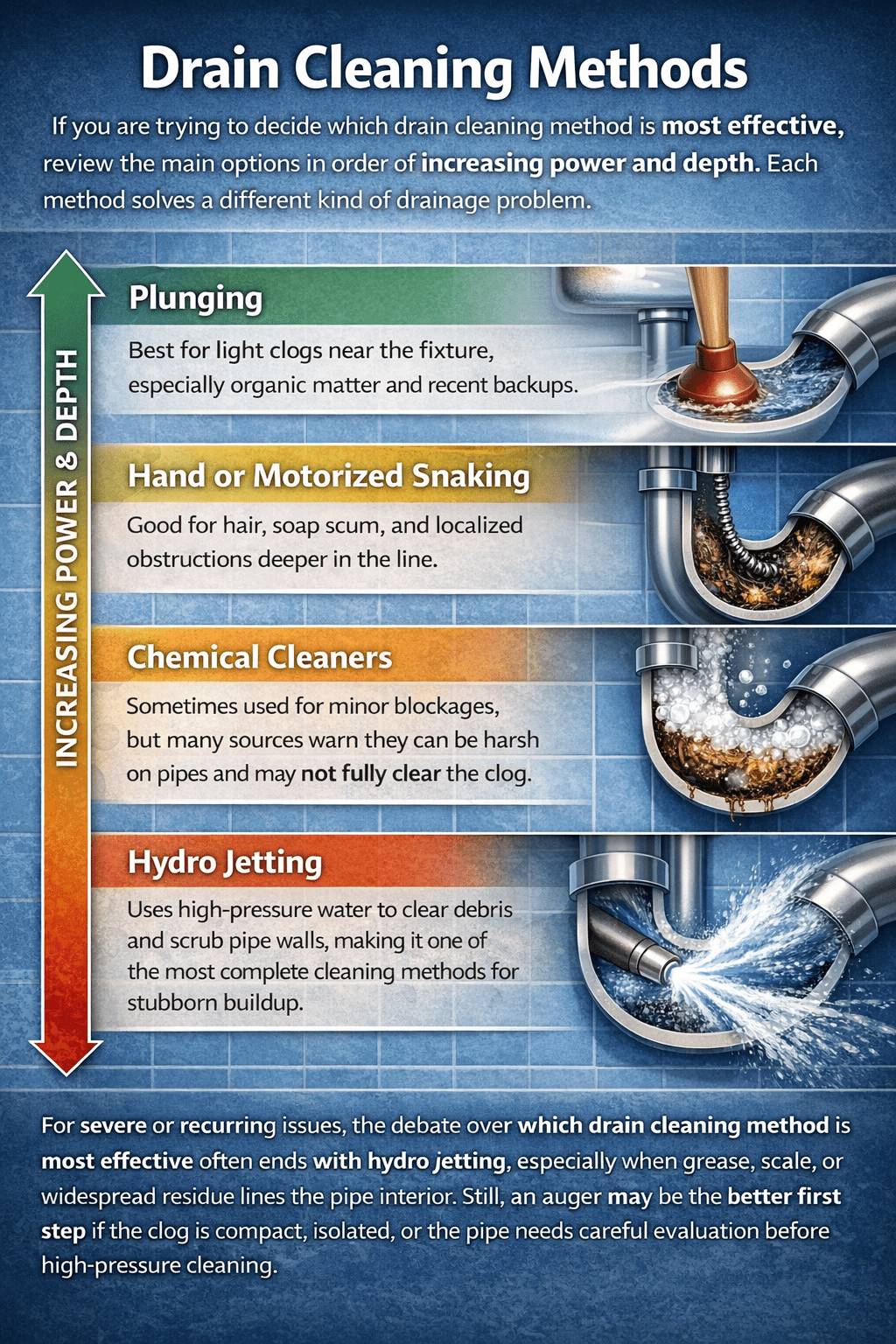
If you are trying to decide which drain cleaning method is most effective, review the main options in order of increasing power and depth. Each method solves a different kind of drainage problem.
- Plunging: Best for light clogs near the fixture, especially organic matter and recent backups.
- Hand or motorized snaking: Good for hair, soap scum, and localized obstructions deeper in the line.
- Chemical cleaners: Sometimes used for minor blockages, but many sources warn they can be harsh on pipes and may not fully clear the clog.
- Hydro jetting: Uses high-pressure water to clear debris and scrub pipe walls, making it one of the most complete cleaning methods for stubborn buildup.
For severe or recurring issues, the debate over which drain cleaning method is most effective often ends with hydro jetting, especially when grease, scale, or widespread residue lines the pipe interior. Still, an auger may be the better first step if the clog is compact, isolated, or the pipe needs careful evaluation before high-pressure cleaning.
How To Do It
If you want a basic answer to which drain cleaning method is most effective for a minor household clog, start with the safest, simplest option. Many guides recommend hot water first, then a proper plunger, and then a hand snake if the drain remains slow.
Follow this order:
- Remove visible debris from the drain opening.
- Pour hot water through the drain if the pipe material and fixture allow it.
- Use a plunger with a firm seal and several steady strokes.
- Use a hand snake to break up or pull out the blockage.
- Stop and call a plumber if the clog returns quickly, affects multiple fixtures, or suggests a deeper line problem.
If you keep asking which drain cleaning method is most effective after those steps fail, the problem is likely beyond a simple surface clog. Repeated backups usually point to buildup deeper in the system, where professional snaking, inspection, or hydro jetting becomes more effective.
How To Find The Right Method
A smart way to answer which drain cleaning method is most effective is to match the method to the symptom. Bathroom sink clogs often involve hair and soap, kitchen drain clogs often involve grease and food residue, and main sewer issues may involve roots or heavy buildup.
Use these signals:
- Slow single sink drain: Try plunging or a hand snake first.
- Shower or tub with hair buildup: A drain snake is often practical and effective.
- Greasy kitchen line: Hydro jetting is often more thorough because it cleans the pipe walls instead of only punching a hole through the blockage.
- Repeated whole-house drainage issues: Ask for inspection plus professional cleaning, because the cause may be deep in the main line.
So, when someone asks which drain cleaning method is most effective, the real answer is the method that fits the clog pattern without damaging the plumbing. The best results come from identifying the source before choosing the tool.
How To Buy Tools And Services
Homeowners also ask which drain cleaning method is most effective because they want to know what to buy. For light maintenance, the most useful purchases are a quality plunger, a small hand auger, drain strainers, and basic protective gloves.
When buying a product or service, use this checklist:
- Choose mechanical tools before harsh chemicals whenever possible, because mechanical methods are generally safer for pipes and often more effective on solid clogs.
- Buy a hand snake sized for the fixture, not a random one-size-fits-all tool.
- Avoid relying on chemical cleaners as the only solution for recurring clogs, because they may not remove the entire blockage.
- For professional service, ask whether the company offers camera inspection, snaking, and hydro jetting so the treatment can match the problem.
If your question is still which drain cleaning method is most effective, buy for the problem you actually have, not the label that sounds strongest. In many homes, small tools are enough for occasional fixture clogs, while recurring line issues justify expert equipment.
How Much And What Is The Cost
Many homeowners phrase their search as which drain cleaning method is most effective, but cost is always part of the decision. A low-cost fix that fails repeatedly can become more expensive over time than a deeper cleaning done correctly the first time.
In general, the cost range follows the complexity of the method:
- Plunger and basic manual cleaning: Lowest cost, usually ideal for minor clogs.
- Hand snake or small auger: Low to moderate cost for DIY tools, useful for hair and localized buildup.
- Professional snaking: Moderate service cost, especially for deeper or stubborn fixture and branch-line clogs.
- Hydro jetting: Higher upfront service cost, but often valued for long-lasting results because it clears pipe walls more completely.
When asking which drain cleaning method is most effective, include the cost of repeat visits, damage risk, and lost time. Chemical cleaners may look cheap on the shelf, but a method that leaves residue behind or harms pipes can create bigger repair bills later.
How To Install Preventive Solutions
A related question behind which drain cleaning method is most effective is how to install prevention so clogs happen less often. Prevention is not glamorous, but it is usually the cheapest and easiest long-term strategy.
Install these items in order:
- Drain strainers in sinks, tubs, and showers to catch hair and debris before they enter the line.
- Grease handling habits in the kitchen, which means never pouring fats and oils down the drain.
- Scheduled professional maintenance for older properties or buildings with frequent backups.
- Inspection before major cleaning if pipes are old, fragile, or have a history of root problems.
When prevention is installed properly, the question which drain cleaning method is most effective comes up less often because the system stays cleaner between service calls. Good maintenance reduces both emergencies and long-term buildup.

How To Clean Drains Safely
The safest answer to which drain cleaning method is most effective for routine care is usually the least aggressive one that can solve the issue. Start with manual methods and move to stronger options only when needed.
Use this cleaning routine:
- Flush with hot water for light residue when appropriate.
- Plunge correctly instead of plunging randomly.
- Snake gently to avoid damaging traps or pushing debris further in.
- Avoid mixing chemical products, and avoid using them after another cleaner is already sitting in the drain.
- Call a professional for repeated clogs, bad odors, gurgling, or multiple blocked fixtures.
This is where which drain cleaning method is most effective becomes a safety question as much as a performance question. The strongest method is not always the right one if the pipe condition is uncertain.
Drain cleaning methods
The main choices are plunging, snaking, chemical treatment, and hydro jetting. Among these, hydro jetting is often considered the deepest cleaning option for stubborn buildup, while snaking remains highly useful for specific, compact clogs.
Drain cleaner solution
A drain cleaner solution may refer to a store-bought chemical or a simple home-care approach. Chemical solutions can have limited success and may be harsh on pipes, so many experts prefer mechanical cleaning first.
Most effective drain unclogger
The most effective drain unclogger depends on the blockage type. For heavy residue along pipe walls, hydro jetting is often the strongest professional option, while a drain snake is a dependable tool for hair and localized obstructions.
Popular drain cleaning techniques
Popular drain cleaning techniques include hot water flushing, plunging, augering, and hydro jetting. These methods vary in price, reach, and thoroughness, which is why no single option fits every clog.
This four-part view helps clarify which drain cleaning method is most effective in real situations rather than in advertisements. A good choice solves the current problem and lowers the chance of another backup soon after.
Advantages And Challenges
To answer which drain cleaning method is most effective, compare the benefits and limitations of each option. Effectiveness is not only about speed; it is also about completeness, safety, and recurrence.
Plunging
- Advantages: Cheap, easy, fast for simple clogs.
- Challenges: Limited reach, less effective for stubborn buildup.
Snaking
- Advantages: Strong on hair, soap scum, and localized blockages; safer than chemicals when used properly.
- Challenges: May open a path without fully cleaning pipe walls.
Chemical cleaners
- Advantages: Convenient and widely available.
- Challenges: May be incomplete, can be harsh on pipes, and are often not ideal for recurring clogs.
Hydro jetting
- Advantages: Thorough, long-lasting, chemical-free, effective on grease, sludge, and heavy residue.
- Challenges: Higher upfront cost, requires professional handling, and may not suit every fragile or damaged pipe without inspection.
This comparison shows why many professionals lean toward hydro jetting when clients ask which drain cleaning method is most effective for persistent problems. Yet the best method still depends on the pipe’s condition and the clog’s exact nature.

FAQ : which drain cleaning method is most effective
Which drain cleaning method is most effective for kitchen sinks?
For kitchen sinks with grease and residue, hydro jetting is often considered the most thorough professional option because it cleans the pipe walls, while plunging or snaking may help with smaller, more localized blockages.
Which drain cleaning method is most effective for hair clogs?
A drain snake is often one of the best choices for hair clogs because it can physically pull or break up the blockage, especially in showers, tubs, and bathroom sinks.
Which drain cleaning method is most effective for recurring clogs?
Recurring clogs usually need more than a quick opening in the blockage, so camera inspection plus professional cleaning, often including hydro jetting, is commonly the better long-term approach.
Which drain cleaning method is most effective if I want to avoid chemicals?
Mechanical methods such as plunging, snaking, and hydro jetting avoid chemical exposure and are widely presented as safer choices for both pipes and the environment than repeated chemical cleaner use.
Which drain cleaning method is most effective for old pipes?
Old pipes should be inspected before aggressive cleaning, because the best method depends on the pipe material, age, and condition; in some cases, snaking may be safer than immediate hydro jetting.
Conclusion
In the end, which drain cleaning method is most effective depends on the blockage, the pipe condition, and the level of cleaning needed. For mild clogs, a plunger or hand snake may be enough, but for stubborn buildup and recurring problems, hydro jetting is often the most complete and durable solution described by current plumbing sources.
The smartest approach is to start safely, diagnose accurately, and choose the least damaging method that fully resolves the issue. That is the real answer to which drain cleaning method is most effective for homeowners who want cleaner drains, fewer repeat clogs, and better long-term plumbing performance.
Other Resources
- benjaminfranklinplumbing.com – Explains several professional drain cleaning methods and when each technique is typically used.
- draintechplumber.com – Describes common drain cleaning methods used by plumbers to remove blockages and maintain pipe flow.
- cnet.com – Reviews chemical drain cleaners and explains how different products are designed to dissolve clogs.
- tempoair.com – Outlines five widely used drain cleaning techniques and their applications in residential plumbing systems.
Other Helpful Articles
- Best Drain Cleaner for Galvanized Pipe – Discusses drain cleaning solutions suitable for older galvanized plumbing pipes.
- pH Drain Cleaner – Explains the pH characteristics of drain cleaners and how alkalinity affects clog removal.
- How Often Should Drains Be Professionally Cleaned – Provides guidance on recommended maintenance intervals for professional drain cleaning services.