
How Often Should Drains Be Professionally Cleaned: Avoid Costly Mistakes
How Often Should Drains Be Professionally Cleaned: Avoid Costly Mistakes
Every homeowner deals with slow drains, unpleasant odors, or unexpected clogs at some point. Yet very few people know how often should drains be professionally cleaned to prevent these problems before they start. Understanding how often should drains be professionally cleaned is not just about convenience — it is about protecting your home’s plumbing infrastructure, saving money, and maintaining a healthy living environment.This comprehensive guide answers every question you have about how often should drains be professionally cleaned, from the basics to cost breakdowns and installation tips.
What Is Professional Drain Cleaning?
Professional drain cleaning is a service performed by licensed plumbers or drain specialists who use advanced tools and techniques to remove buildup, blockages, and debris from your home’s drainage system. Unlike simple DIY methods such as plunging or pouring chemical solutions down the pipe, professional cleaning reaches deep into the pipeline to address root causes.
When you think about how often should drains be professionally cleaned, you first need to understand what the service actually involves. Professionals typically use one or more of the following methods:
-
Hydro-jetting — high-pressure water blasts away grease, scale, and debris
-
Drain snaking — a flexible auger breaks apart or retrieves clogs
-
Video camera inspection — identifies hidden blockages or pipe damage
-
Chemical treatments — enzyme-based cleaners dissolve organic buildup safely
Knowing how often should drains be professionally cleaned starts with knowing what professionals actually do when they arrive. Each method targets different types of buildup and pipe conditions, so the right frequency depends on which issues your home is prone to.
Why It Matters: Understanding How Often Should Drains Be Professionally Cleaned
Neglecting your drains can lead to serious consequences. Sewage backups, pipe corrosion, mold growth, and structural water damage are all linked to poorly maintained drainage systems. This is exactly why understanding how often should drains be professionally cleaned matters so much.
How often should drains be professionally cleaned also depends on the age of your plumbing. Older homes with cast-iron or clay pipes accumulate buildup faster than modern PVC systems. The frequency question — how often should drains be professionally cleaned — is therefore not a one-size-fits-all answer but varies by household.
Regular professional cleaning:
-
Prevents emergency plumbing repairs
-
Extends the life of your pipes
-
Eliminates foul odors caused by organic buildup
-
Reduces the risk of sewage backups and water damage
-
Keeps your water flowing efficiently year-round
How Often Should Drains Be Professionally Cleaned: General Recommendations
The most widely accepted answer among plumbing experts is that how often should drains be professionally cleaned depends on usage and household size. Here are the standard guidelines:
-
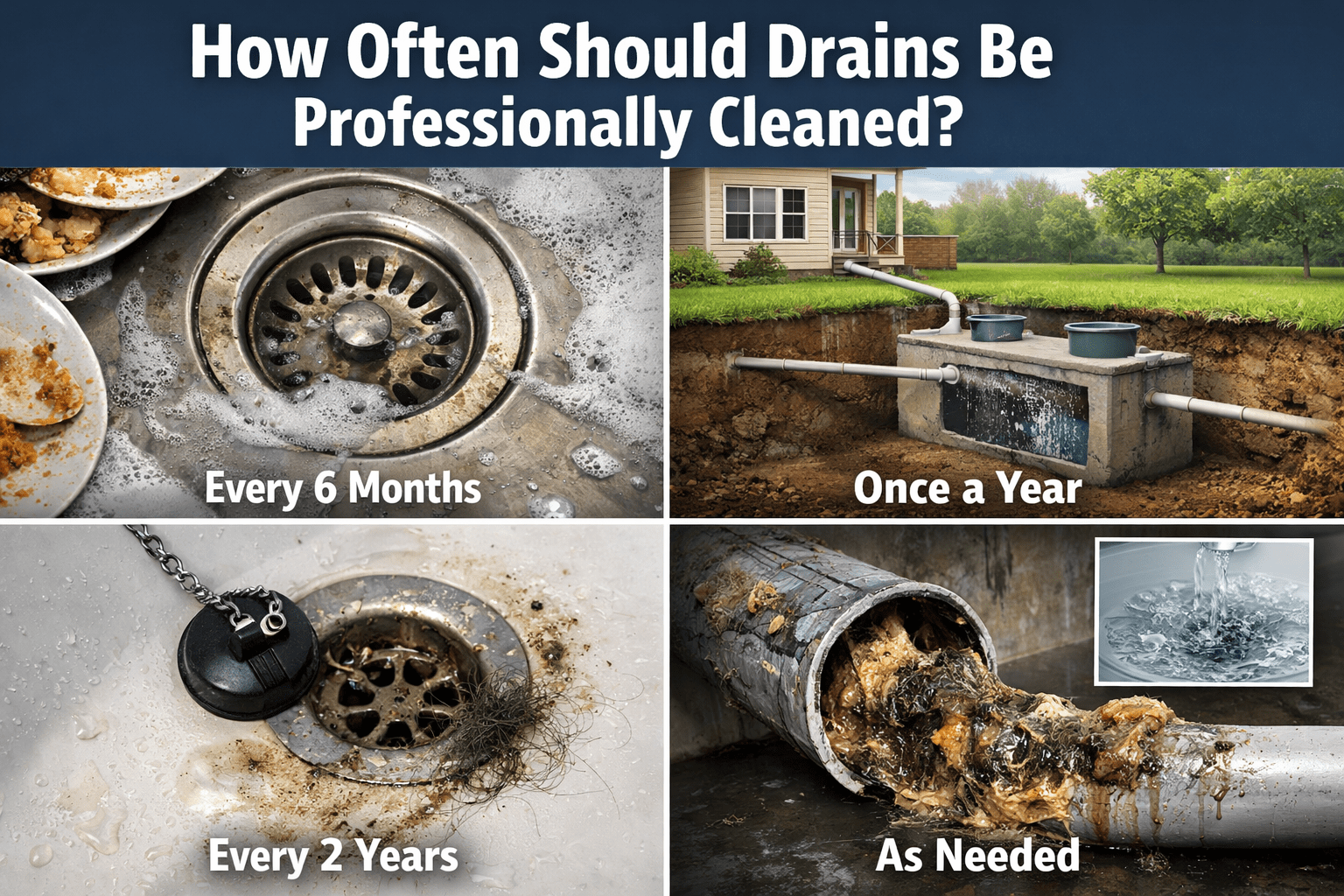
Average household (2–4 people): Once every 18 to 24 months
-
Large household (5+ people): Once every 12 months
-
Homes with older plumbing: Once every 12 months
-
Homes with frequent clogs: Every 6 to 12 months
-
Commercial properties: Every 3 to 6 months
How often should drains be professionally cleaned can also shift based on what goes down your drains. Households that cook frequently and wash grease down the kitchen sink, or those with long hair regularly going down bathroom drains, will need more frequent service.
How often should drains be professionally cleaned is a question plumbers hear constantly, and most recommend at least once annually as a preventative baseline for the average home.
How to Tell When Your Drains Need Professional Cleaning
Beyond the standard schedule, there are clear warning signs that tell you it is time — regardless of how often should drains be professionally cleaned on a normal cycle. Watch for these indicators:
-
Water drains noticeably slower than usual
-
Gurgling or bubbling sounds come from your pipes
-
Unpleasant odors rise from your sink, tub, or floor drains
-
Water backs up into a sink, tub, or toilet
-
Multiple drains are slow or clogged simultaneously
-
Fruit flies or drain flies appear near fixtures
-
You notice damp spots or water stains near pipes
When multiple drains show problems at the same time, this is almost always a sign of a main sewer line issue — a situation where knowing how often should drains be professionally cleaned becomes urgent rather than routine.
How often should drains be professionally cleaned should increase any time these warning signs appear, even if you recently had a service call.
How to Find a Professional Drain Cleaning Service
Finding the right professional is just as important as knowing how often should drains be professionally cleaned. Here is how to locate a reliable service:
-
Search online directories — Google, Yelp, and Angi list licensed plumbers with verified reviews
-
Check licensing and insurance — Always confirm the contractor holds a valid state plumbing license
-
Ask for references — Reputable professionals welcome referrals from past clients
-
Request a written estimate — Get pricing in writing before any work begins
-
Look for specialists — Some companies focus exclusively on drain and sewer services
When evaluating providers, ask them directly: how often should drains be professionally cleaned for a home like yours? A trustworthy plumber will give a specific, honest recommendation based on your pipe age, household size, and history — not just try to upsell you on unnecessary visits.
How often should drains be professionally cleaned is a question your chosen plumber should be able to answer with clarity and specificity. If they cannot, consider finding someone else.
How to Buy the Right Drain Cleaning Service Package
Once you know how often should drains be professionally cleaned in your home, the next step is choosing the right service package. Many plumbing companies offer tiered options:
-
Basic drain cleaning — Snaking a single drain, ideal for isolated clogs
-
Full-home drain service — Covers all fixtures, kitchen, bathrooms, and laundry
-
Hydro-jetting package — Deep cleaning for homes with heavy grease or mineral buildup
-
Preventative maintenance plan — Scheduled annual or biannual visits at a discounted rate
Preventative maintenance plans are excellent for homeowners who want to automate the answer to how often should drains be professionally cleaned. You sign up, pay a flat annual fee, and the company schedules your service automatically.
When buying a package, confirm it includes a camera inspection, which helps identify underlying pipe damage that basic cleaning cannot fix. How often should drains be professionally cleaned also ties directly into what level of service you choose — deeper cleanings can stretch the interval between visits.
How Much Does Professional Drain Cleaning Cost?
Cost is a practical concern for every homeowner asking how often should drains be professionally cleaned. Here is a breakdown of average prices across the United States:
-
Single drain snaking: $100 – $275
-
Main sewer line cleaning: $150 – $500
-
Hydro-jetting (standard): $300 – $600
-
Hydro-jetting (heavy buildup): $600 – $1,200
-
Camera inspection add-on: $100 – $300
-
Annual maintenance plan: $150 – $400 per year
Investing in an annual plan is often the smartest financial decision when you consider how often should drains be professionally cleaned. Paying $200 per year is far less expensive than a $3,000 emergency pipe repair caused by years of neglected buildup.
How often should drains be professionally cleaned directly impacts your long-term plumbing costs. Homeowners who service their drains regularly almost always spend less on emergency plumbing over the life of their home.
What Is the Cost of Ignoring Drain Maintenance?
Understanding how often should drains be professionally cleaned also means understanding the cost of neglect. When drains are not maintained, problems compound quickly:
-
Pipe corrosion from acidic buildup: repair costs of $500 – $5,000
-
Sewage backup cleanup and remediation: $2,000 – $10,000
-
Mold remediation from water damage: $1,500 – $6,000
-
Full pipe replacement for severely damaged lines: $3,000 – $15,000
These figures make it clear that how often should drains be professionally cleaned is not a luxury question — it is a financial safety question. Regular maintenance at $200 per year can prevent five-figure repair bills.
How often should drains be professionally cleaned should be treated the same way you treat other home maintenance tasks like HVAC service or roof inspections — as a non-negotiable part of your annual home care routine.
How to Install Drain Guards and Reduce Cleaning Frequency
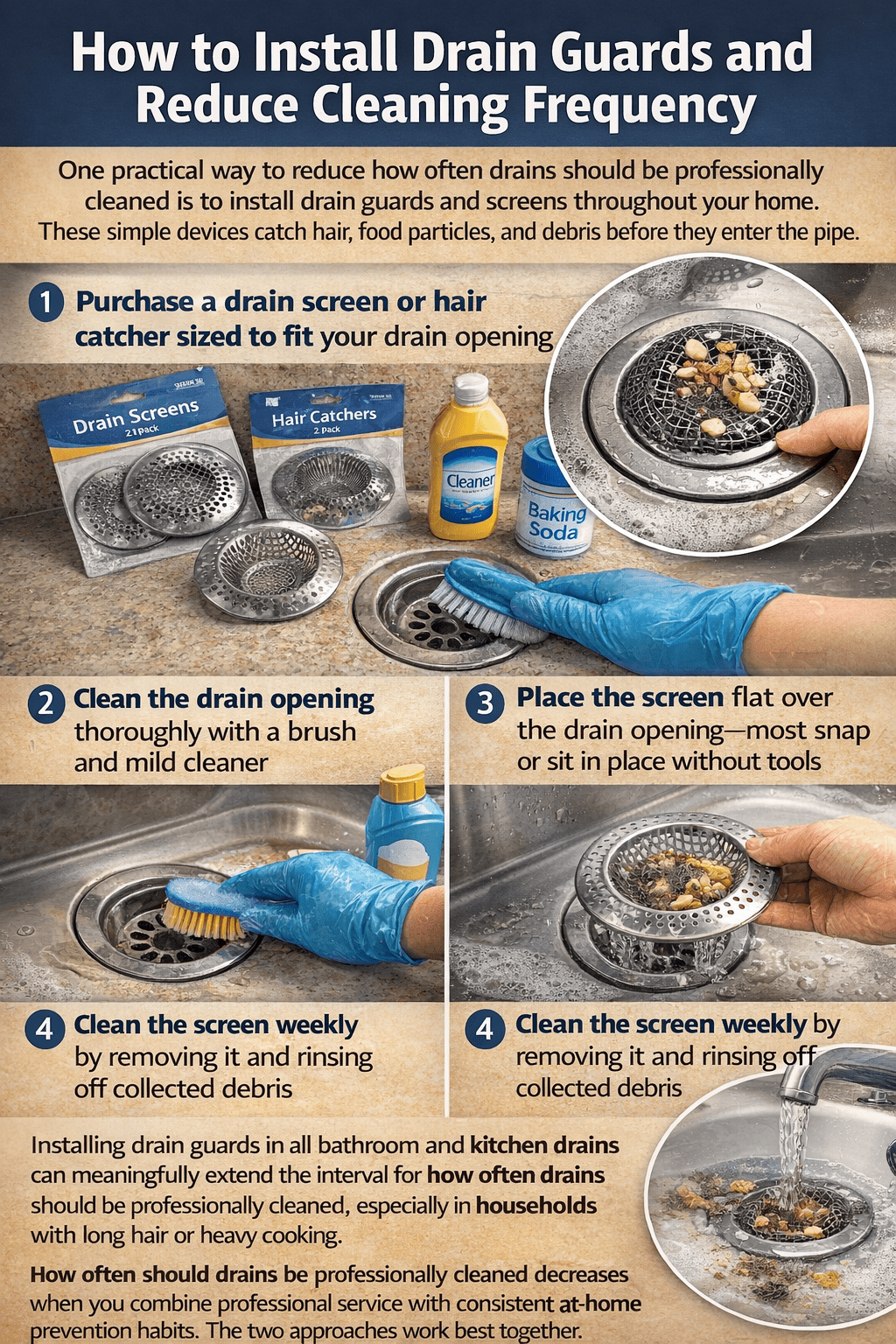
One practical way to reduce how often should drains be professionally cleaned is to install drain guards and screens throughout your home. These simple devices catch hair, food particles, and debris before they enter the pipe.
Here is how to install a basic drain guard:
-
Purchase a drain screen or hair catcher sized to fit your drain opening
-
Clean the drain opening thoroughly with a brush and mild cleaner
-
Place the screen flat over the drain opening — most snap or sit in place without tools
-
Press firmly to ensure a snug fit with no gaps around the edges
-
Clean the screen weekly by removing it and rinsing off collected debris
Installing drain guards in all bathroom and kitchen drains can meaningfully extend the interval for how often should drains be professionally cleaned, especially in households with long hair or heavy cooking.
How often should drains be professionally cleaned decreases when you combine professional service with consistent at-home prevention habits. The two approaches work best together.
How to Clean Drains Between Professional Visits
Knowing how often should drains be professionally cleaned does not mean you should ignore your drains between appointments. Regular DIY maintenance keeps buildup from accelerating. Here are safe, effective methods:
-
Baking soda and vinegar flush: Pour ½ cup baking soda, then ½ cup white vinegar down the drain, wait 15 minutes, then flush with hot water
-
Boiling water flush: Slowly pour a full kettle of boiling water down kitchen drains weekly to melt grease
-
Enzyme drain cleaner: Pour a biological enzyme product monthly — it digests organic matter without harming pipes
-
Manual hair removal: Use a drain snake or hair removal tool monthly in bathroom drains
-
Dish soap and hot water: Squirt dish soap down the kitchen drain and follow with hot water to cut grease
None of these DIY methods replace professional service, but they do extend the time between visits and reduce the frequency of how often should drains be professionally cleaned on an emergency basis.
How often should drains be professionally cleaned at the professional level remains the same, but consistent at-home cleaning reduces the severity of buildup that technicians encounter when they arrive.
Advantages and Challenges of Professional Drain Cleaning
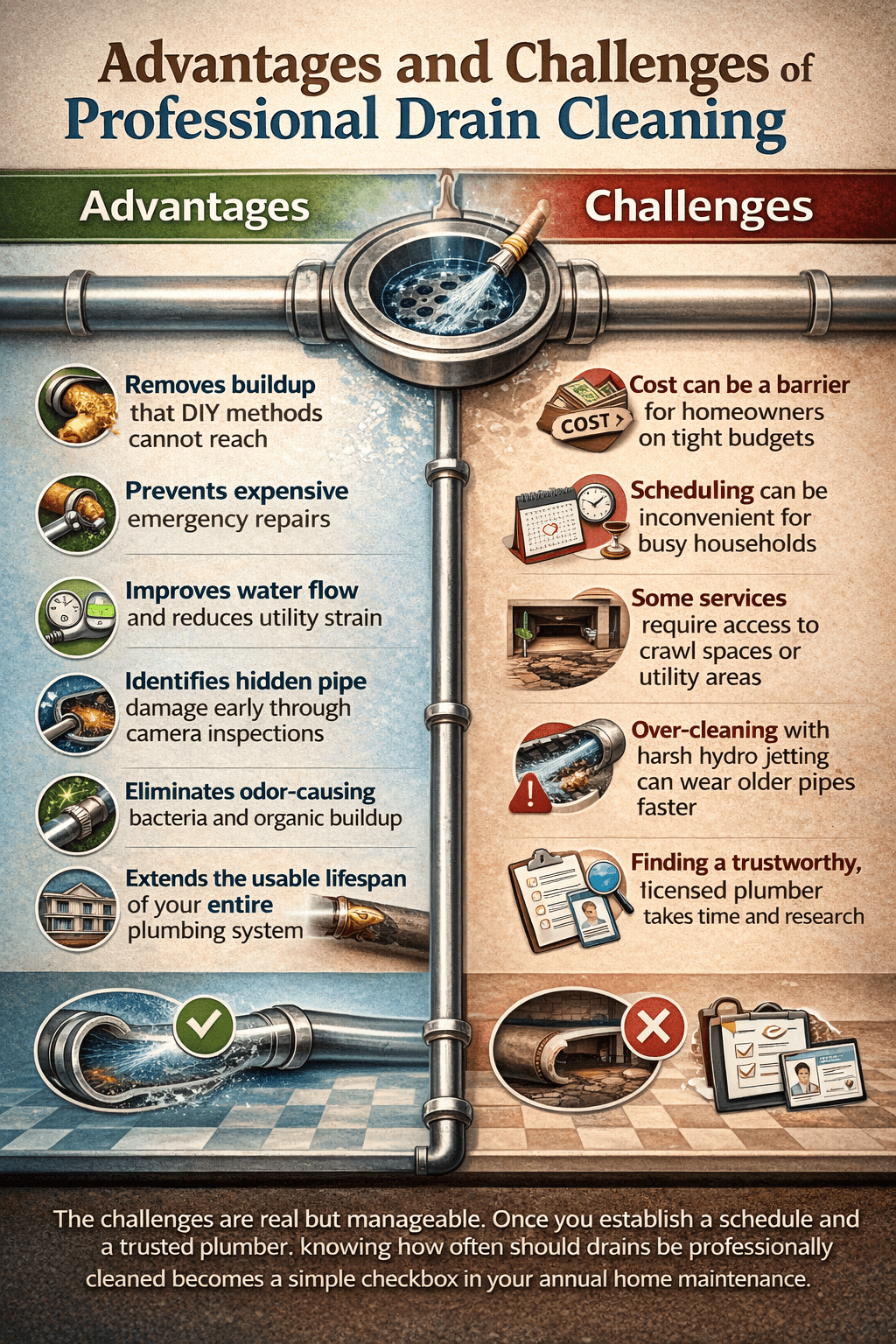
Like any home maintenance service, there are both clear benefits and real challenges to consider when deciding how often should drains be professionally cleaned.
Advantages:
-
Removes buildup that DIY methods cannot reach
-
Prevents expensive emergency repairs
-
Improves water flow and reduces utility strain
-
Identifies hidden pipe damage early through camera inspections
-
Eliminates odor-causing bacteria and organic buildup
-
Extends the usable lifespan of your entire plumbing system
Challenges:
-
Cost can be a barrier for homeowners on tight budgets
-
Scheduling can be inconvenient for busy households
-
Some services require access to crawl spaces or utility areas
-
Over-cleaning with harsh hydro-jetting can wear older pipes faster
-
Finding a trustworthy, licensed plumber takes time and research
The challenges are real but manageable. Once you establish a schedule and a trusted plumber, knowing how often should drains be professionally cleaned becomes a simple checkbox in your annual home maintenance routine — not a stressful unknown.
FAQ : How Often Should Drains Be Professionally Cleaned
What happens if I never have my drains professionally cleaned?
Over time, grease, soap scum, hair, and mineral deposits build up inside your pipes. This leads to slow drains, clogs, sewage backups, and eventually pipe damage. Ignoring how often should drains be professionally cleaned can result in costly repairs ranging from hundreds to thousands of dollars.
Is professional drain cleaning safe for all types of pipes?
Most methods, including snaking and enzyme treatments, are safe for all pipe materials. Hydro-jetting should be avoided on fragile or very old clay pipes. Always inform your plumber of your pipe material before service. How often should drains be professionally cleaned may also vary by pipe type.
Can I use chemical drain cleaners instead of hiring a professional?
Chemical drain cleaners like Drano offer temporary relief but are corrosive and can damage pipes over time. They do not address root-cause buildup. Understanding how often should drains be professionally cleaned means recognizing that chemicals are not a substitute for real service.
How long does a professional drain cleaning take?
A single drain cleaning typically takes 30 to 60 minutes. A full-home service with camera inspection can take 2 to 4 hours. When budgeting time around how often should drains be professionally cleaned, plan for a half-day appointment for comprehensive service.
Does homeowner’s insurance cover professional drain cleaning?
Standard homeowner’s insurance does not cover routine maintenance like drain cleaning. However, if a sewer backup causes property damage, your policy may cover remediation costs — another reason why staying ahead of how often should drains be professionally cleaned protects your finances.
How often should drains be professionally cleaned in a rental property?
Landlords should schedule professional cleaning every 12 months at minimum, or after each tenant turnover. High occupancy increases buildup rates significantly. How often should drains be professionally cleaned in rental units should be written into the property maintenance schedule proactively.
Conclusion
Understanding how often should drains be professionally cleaned is one of the most valuable pieces of home maintenance knowledge you can have. For most households, the answer is once every one to two years — but factors like household size, pipe age, cooking habits, and drain history can push that frequency higher. How often should drains be professionally cleaned is not a question to guess at; it is one to discuss with a licensed professional who can assess your specific system.
How often should drains be professionally cleaned should be treated as a routine investment, not a reactive expense. By pairing annual or biannual professional service with consistent at-home drain maintenance, you protect your pipes, your wallet, and your peace of mind. Whether you are a new homeowner or managing a large family home, making a plan around how often should drains be professionally cleaned is a decision your future self will thank you for.
The answer to how often should drains be professionally cleaned is clear: do not wait for a backup or an emergency to act. Schedule service proactively, find a trusted plumber, and make drain maintenance part of your annual home care checklist. How often should drains be professionally cleaned is a question every homeowner deserves a confident answer to — and now you have one.
Other Resources
- rotorooter.com – Explains recommended intervals for professional drain cleaning and factors that affect how often maintenance is needed.
- thomasgalbraith.com – Provides guidance on how frequently homeowners should clean household drains to prevent blockages.
- mrplumberindy.com – Discusses maintenance schedules and practical tips for keeping residential drains clear.
Other Helpful Articles
- Electric Eel Drain Cleaner – Explains how electric eel drain machines are used to remove clogs inside plumbing systems.
- How Much Is a Drain Cleaning Service – Provides an overview of typical pricing and factors that influence professional drain cleaning costs.
- Best Drain Cleaner for Galvanized Pipe – Describes suitable drain cleaning products for older galvanized plumbing pipes.
- pH Drain Cleaner – Explains the pH characteristics of drain cleaners and how acidity or alkalinity affects clog removal.